Your complete guide to a safe and responsible chemical clean out in Sydney. Learn about free NSW EPA events, accepted waste types, and actionable tips for safely disposing of hazardous household chemicals in 20 detailed sections.
The safe and responsible disposal of chemical waste in Sydney is managed through two distinct and legally separate streams: Household Chemical Clean Out and Commercial Chemical Waste Disposal.
🏠 Household Chemical Clean Out (NSW EPA Program)
The Household Chemical CleanOut program is the primary resource for Sydney residents to dispose of household quantities of hazardous chemicals for free.
Service Model: These are periodic, drive-through collection events sponsored by the NSW Environment Protection Authority (EPA) and supported by local councils.
Cost: Free for all NSW residents.
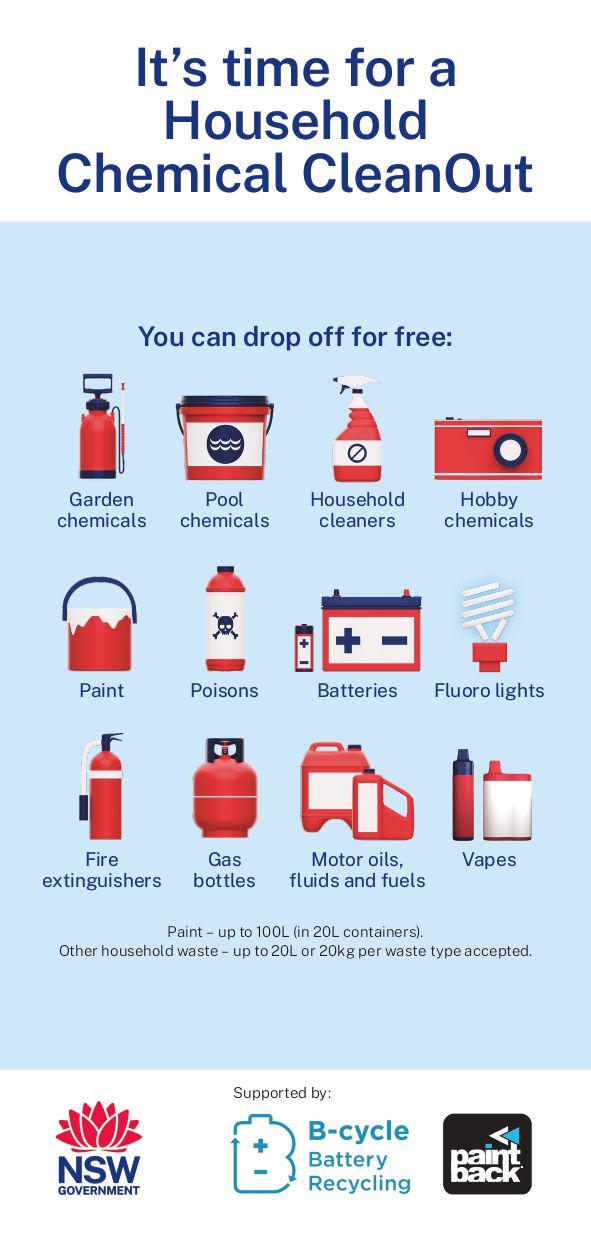
Accepted Waste (Typical): Old paint, motor oils, household batteries, gas bottles, fire extinguishers, pool chemicals, pesticides, solvents, and acids/alkalis.
Quantity Limits: Strict limits apply, typically a maximum of 20 litres or 20 kilograms for a single item (with an exception for paint up to 100L).
Purpose: To prevent toxic household waste from ending up in kerbside bins, drains, or landfill, thus protecting human health and the environment.
Year-Round Alternative: For specific items (like paint, oils, and batteries), residents can use the permanent Community Recycling Centres (CRCs) across Sydney year-round.
🏢 Commercial Chemical Waste Disposal
Businesses and commercial operations cannot use the free household events, as they produce larger volumes and a wider variety of industrial-grade waste. Disposal for businesses is strictly regulated and requires a contractual arrangement.
Service Model: Businesses must engage licensed commercial hazardous waste management companies (like Cleanaway, Wanless, or others) that are fully compliant with EPA regulations.
Cost: The service is fee-based, with costs varying significantly based on the type, volume, and toxicity of the waste.
Accepted Waste (Typical): Laboratory chemicals, industrial solvents, large quantities of contaminated oils, chemical by-products from manufacturing, and other regulated hazardous materials.
Quantity Limits: Businesses deal with commercial or industrial quantities, which require specialised containment, transport, and treatment.
Regulation: Disposal is governed by stringent NSW EPA regulations, primarily the Protection of the Environment Operations (POEO) Act 1997. Businesses bear the legal 'Duty of Care' to ensure their waste is safely handled and tracked from collection to final disposal.
Disposal Process: Involves waste assessment, secure collection, transport by licensed carriers, and advanced treatment methods (e.g., neutralisation, resource recovery, or high-temperature destruction).
1. Introduction: Why Your Chemical Clean Out Matters
As a Sydney resident, you likely have common household chemicals stored away—old paints, pool treatments, or motor oils. These aren't just clutter; they are hazardous materials that pose a serious threat to human health and the environment if not disposed of correctly. A responsible chemical clean out is not just about decluttering; it's a vital step in protecting our cherished Sydney waterways and community.
2. The Dangers of Improper Chemical Disposal
Pouring chemicals down the drain, into the gutter, or placing them in your general waste bin is both illegal and dangerous. These materials can:
Contaminate soil and groundwater.
Harm local wildlife and aquatic ecosystems.
Cause dangerous reactions or fires in garbage trucks and processing facilities.
Put waste management workers at risk.
3. The Cornerstone Program: NSW EPA's Household Chemical CleanOut
The primary and most effective way for Sydney residents to dispose of hazardous household chemicals is through the free Household Chemical CleanOut program, funded by the NSW Environment Protection Authority (EPA). This service offers scheduled, supervised drop-off days across Sydney and New South Wales.
4. What is a Chemical Clean Out Event?
These are free, temporary drive-through collection days held by the NSW EPA and supported by local councils. You simply drive up, and trained personnel safely unload and sort your chemicals for processing and disposal. It's safe, compliant, and designed for household quantities.
5. Accepted Materials for Your Chemical Clean Out
The program accepts a wide range of common household hazardous wastes. You can bring up to a maximum of 20 litres or 20 kilograms of a single item, with an exception for paint (up to 100L in 20L containers).
H3. Common Items Accepted:
Paints & Solvents: Paint (oil and water-based), thinners, varnishes, wood polishes.
Poisons & Pesticides: Weed killers, garden chemicals, rat poison.
Automotive Products: Motor oils, fuels, fluids, car batteries.
Acids & Alkalines: Pool chemicals, household cleaners (ammonia-based, oven cleaner).
Hobby Chemicals: Photographic chemicals, solvents.
Other Problem Wastes: Fluorescent globes and tubes, gas bottles, fire extinguishers.
6. Items Not Accepted at Clean Out Events
Note that these events are strictly for household quantities of hazardous chemicals. They generally do not accept:
Business or commercial quantities of waste.
Medical waste (return unwanted medicines to pharmacies).
Asbestos (requires specialised, separate disposal).
Explosives or ammunition.
7. Finding an Upcoming Chemical Clean Out Event in Sydney
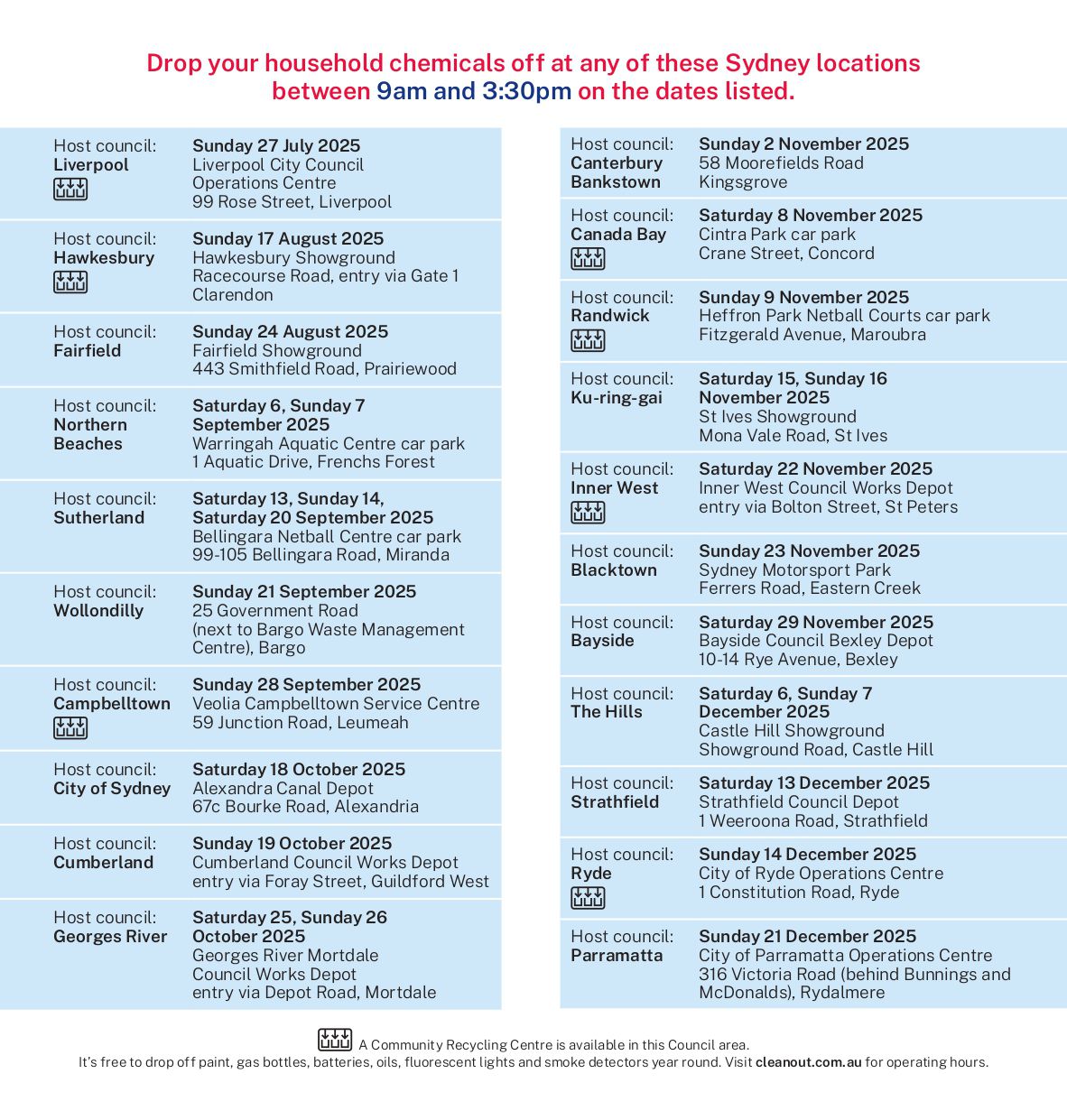
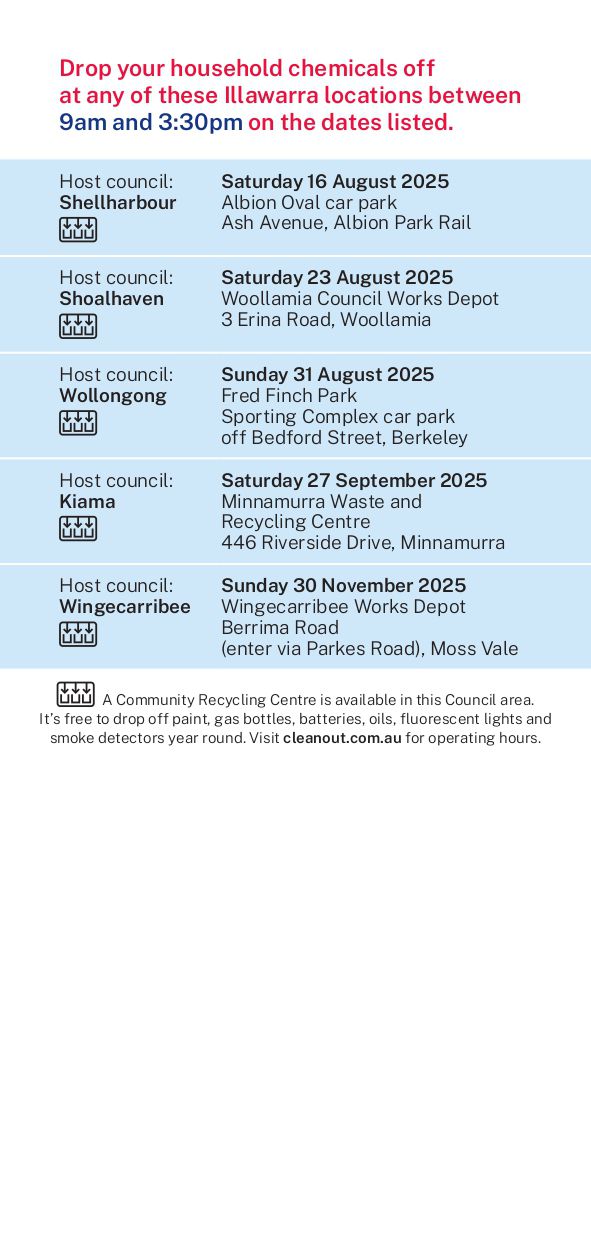
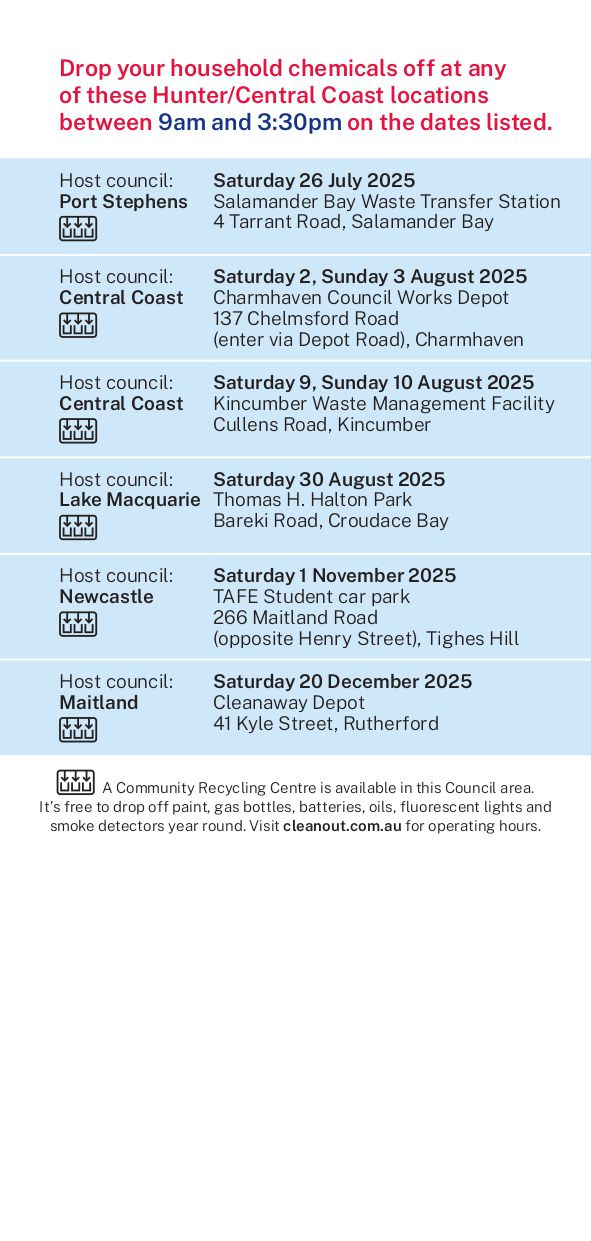
Events are held periodically throughout the Sydney metropolitan area.
Actionable Tip: Visit the official NSW EPA Household Chemical CleanOut website or check your local Sydney council's waste and recycling section for upcoming dates and locations. They rotate to ensure accessibility across different council areas.
8. Preparing for Your Chemical Clean Out Journey
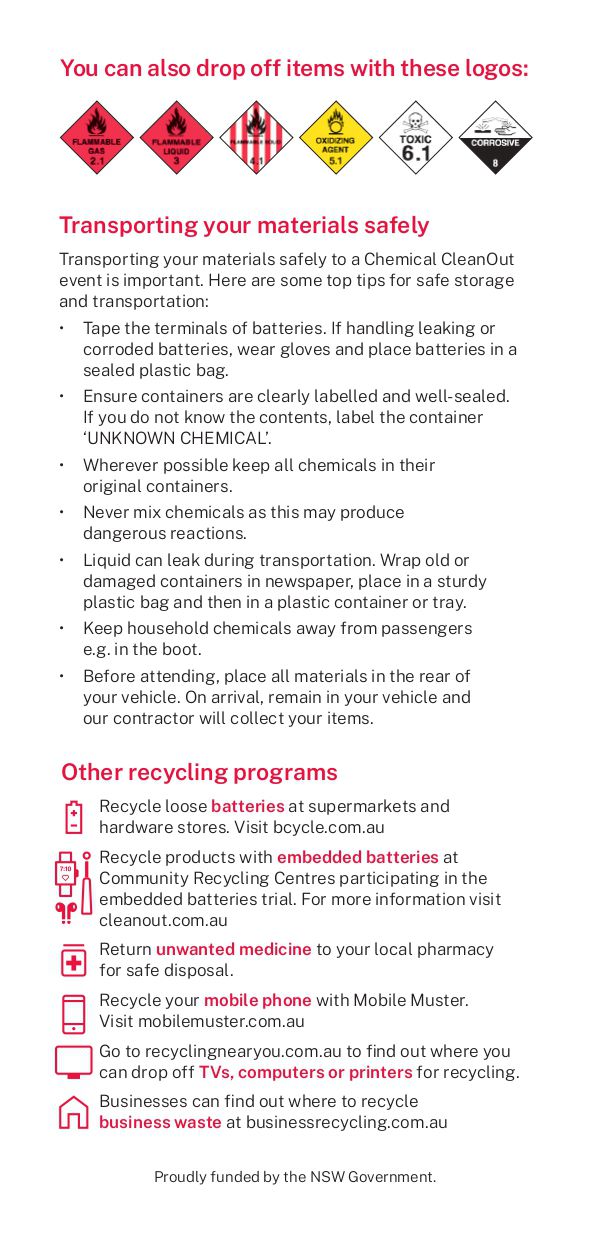
Safety during transport is paramount. Follow these crucial steps before leaving home:
Keep Originals: Wherever possible, keep chemicals in their original, clearly labelled containers.
Seal Tightly: Ensure all lids are tightly secured to prevent leaks.
Label Unknowns: If the contents are unknown, clearly label the container as 'UNKNOWN CHEMICAL'.
Never Mix: Do NOT mix chemicals, as this can create dangerous and volatile reactions.
9. Safe Transportation Tips
Once prepared, you need to transport the materials safely to the chemical clean out location.
Contain Liquids: Place containers holding liquids in sturdy plastic buckets or trays, secured away from passenger areas.
Secure Containers: Use newspaper or rags to pack items securely and prevent movement or breakage in the boot or trailer.
Isolate from Passengers: Place all chemicals in the boot of your car, away from anyone in the cabin.
10. The On-Site Drop-Off Experience
The Clean Out process is designed to be quick and safe:
Stay in Your Vehicle: At the event site, you will generally be instructed to remain in your vehicle.
Follow Staff: Trained contractors will approach your vehicle and safely unload the chemicals.
Observe Limits: Staff will check that you are adhering to the 20kg/20L household quantity limits.
11. Year-Round Disposal: Community Recycling Centres (CRCs)
While Chemical CleanOut events are periodic, Sydney residents have access to permanent drop-off points called Community Recycling Centres (CRCs). These centres accept common problem wastes year-round, for free.
12. Accepted Items at Sydney CRCs
CRCs are an excellent, convenient option for specific, regular household problem wastes:
Paint (up to 20L)
Used motor oils and other oils
Car and household batteries
Gas bottles
Fluorescent globes and tubes
Smoke detectors
13. Understanding Your Local Council's Role
Sydney councils play a pivotal role in promoting and hosting the NSW EPA Chemical CleanOut events. Your local council website is often the best resource for event dates specific to your region.
14. Alternative Disposal for Specific Products
Not all hazardous waste is managed through the EPA program. Utilise these other dedicated services:
Medicines: Return unwanted and expired pharmaceuticals to any local pharmacy via the Return Unwanted Medicines (RUM) project.
Mobile Phones: Recycle old phones and accessories through Mobile Muster.
Printer Cartridges: Drop-off at major office supply stores and Australia Post locations.
15. The Importance of Recycling and Resource Recovery
A chemical clean out is not just disposal; it's about resource recovery. Many collected materials are recycled:
Batteries: Lead, acid, and plastic are recovered.
Oils: Re-refined and used as a base for new lubricating oil.
Gas Bottles: Degassed, de-valved, and the steel is recycled.
Paint: Mixed with other solvents and used as a fuel source in cement manufacturing.
16. Actionable Tip: Minimise Chemical Waste
The best waste is the waste we don't create.
Buy chemicals in the smallest quantities needed.
Choose non-toxic or environmentally friendly alternatives where possible.
Share leftover, usable chemicals with neighbours or community groups.
17. Frequently Asked Questions (FAQs)
Q. Is the Household Chemical Clean Out service really free?
A: Yes. The service for household quantities is funded by the NSW Government, so there is no charge to the resident for dropping off accepted materials.
Q. What if I can't make it to a scheduled Chemical Clean Out event?
A: You can use a permanent Community Recycling Centre (CRC) in Sydney for year-round, free disposal of specific problem wastes like paint, oils, and batteries. Check the NSW EPA website for CRC locations.
Q. Can my business use the Household Chemical CleanOut events?
A: No, the service is only for household quantities of waste. Businesses must use a licensed commercial waste management service for disposal.
Q. Can I drop off multiple items?
A: Yes, you can drop off multiple items, but each single item is restricted to a maximum of 20kg or 20L (100L limit for paint).
18. Case Study: Sydney's Environmental Impact
Thanks to the dedication of Sydney residents engaging in the Chemical Clean Out program, millions of kilograms of hazardous waste have been diverted from landfill and our natural environment. This collective effort is instrumental in maintaining the pristine condition of Sydney Harbour and its surrounding ecosystems.
19. The Legal Consequences of Non-Compliance
Improper disposal of hazardous chemicals—such as illegal dumping or pouring down the drain—can lead to significant fines under NSW environmental protection laws. Complying with the Chemical CleanOut program is the simplest way to avoid penalties.
20. Conclusion: Be a Waste Warrior and Get Your Chemical Clean Out Sorted!
Your commitment to a thorough and safe chemical clean out is crucial for a cleaner, safer, and more sustainable Sydney. Utilising the free NSW EPA Household Chemical CleanOut events and local Community Recycling Centres is the gold standard for responsible chemical management. Don't wait for a crisis; audit your home's hazardous waste today!
Ready to protect Sydney's environment?Click here to find the next free NSW EPA Household Chemical CleanOut event near you and take action today!